

 Français
 Espagnol
 Allemand
 Italien










Secure payment
3D secure

Delivery in 72 hours
Sending with tracking

Description
Remarks:
Ticket-carton, surchargé "Amiens CD perception''
Plis, 1 trou et salissures
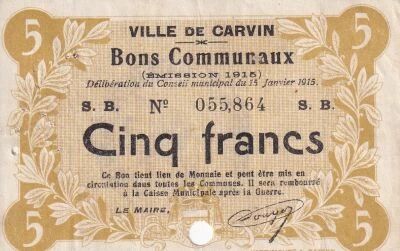
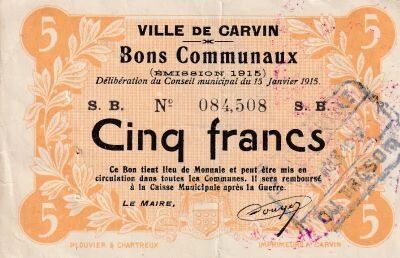
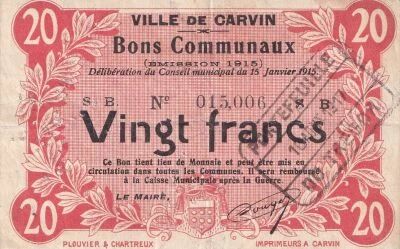
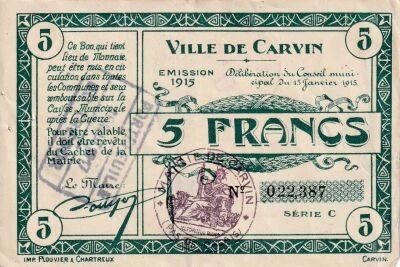
The Two-Franc Bond of the Town of Crépy-en-Laonnois is a locally issued banknote dating from 1915, produced in the context of the German military occupation during the First World War. This type of fiduciary document constitutes a rare and historically significant piece, bearing witness to the particular economic conditions imposed by the war on the occupied French territories.
During the conflict of 1914-1918, many municipalities in the occupied regions of northern and eastern France found themselves unable to maintain a normal monetary circulation. Faced with a shortage of official paper currency, local authorities, often under the control or with the approval of the German military administration, proceeded to issue emergency vouchers. These documents served as monetary substitutes for everyday transactions among the civilian population.
The town of Crépy-en-Laonnois, a locality situated in the Aisne department, is one of those municipalities that resorted to this emergency mechanism. The note, with a face value of two francs, falls within the category of German military necessity issues of 1915, which distinguishes it from purely French municipal issues of local initiative.
This note weighs 1 gram, which is consistent with the usual physical characteristics of the paper supports used for this type of issue at the time. These emergency vouchers generally feature textual mentions indicating the issuing municipality, the face value, as well as security elements designed to limit the risk of counterfeiting.
From a numismatic and notaphilic perspective, the emergency issues of the First World War, particularly those from occupation zones, are today sought-after collectibles among specialists in wartime currency and French local economic history.