

 Français



Secure payment
3D secure

Delivery in 72 hours
Sending with tracking

Description
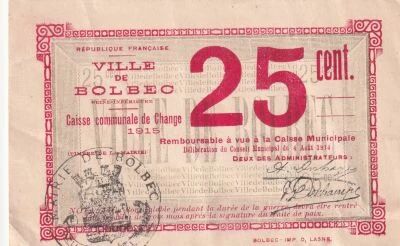
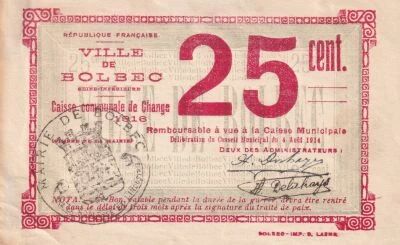
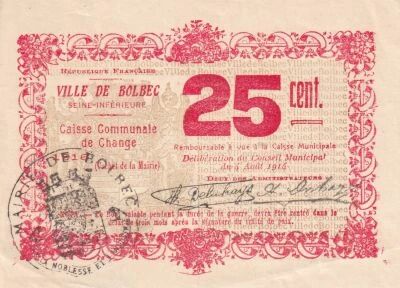
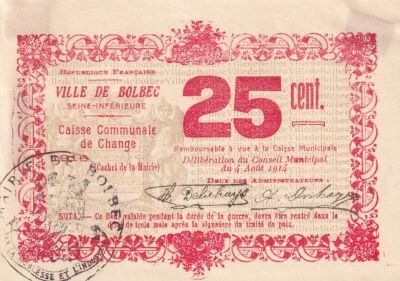
The 1 franc note from the City of Bolbec, issued in 1915 by the Caisse Communale de Change, is a characteristic example of local emergency currency that appeared in France during the First World War. Faced with the shortage of metallic coinage caused by the wartime context, many municipalities and chambers of commerce were forced to issue their own payment instruments to compensate for the lack of currency in circulation.
Bolbec, an industrial town in Seine-Maritime, in Normandy, known particularly for its textile industry, was among those communities that established a local exchange structure in order to maintain daily commercial transactions. The Caisse Communale de Change was the official issuing body of this note, conferring upon it institutional legitimacy at the municipal level.
This note has a face value of one franc, the standard monetary unit of the era in France. It is part of a series of denominations intended to circulate locally, as a substitute for the missing coins. These municipal or departmental issues, although lacking the status of national legal tender, were generally accepted by merchants and residents of the relevant area.
From a numismatic point of view, this type of document constitutes a first-rate historical testimony to the economic and monetary adaptations of France in wartime. The emergency notes issued between 1914 and 1920 are today catalogued and collected as a category in their own right within French paper money, often referred to as emergency currency or war money. Their state of preservation, the clarity of the printing and the rarity of certain local issues determine their value among specialist collectors.