

 Français
 Espagnol
 Allemand
 Italien





Secure payment
3D secure

Delivery in 72 hours
Sending with tracking

Description
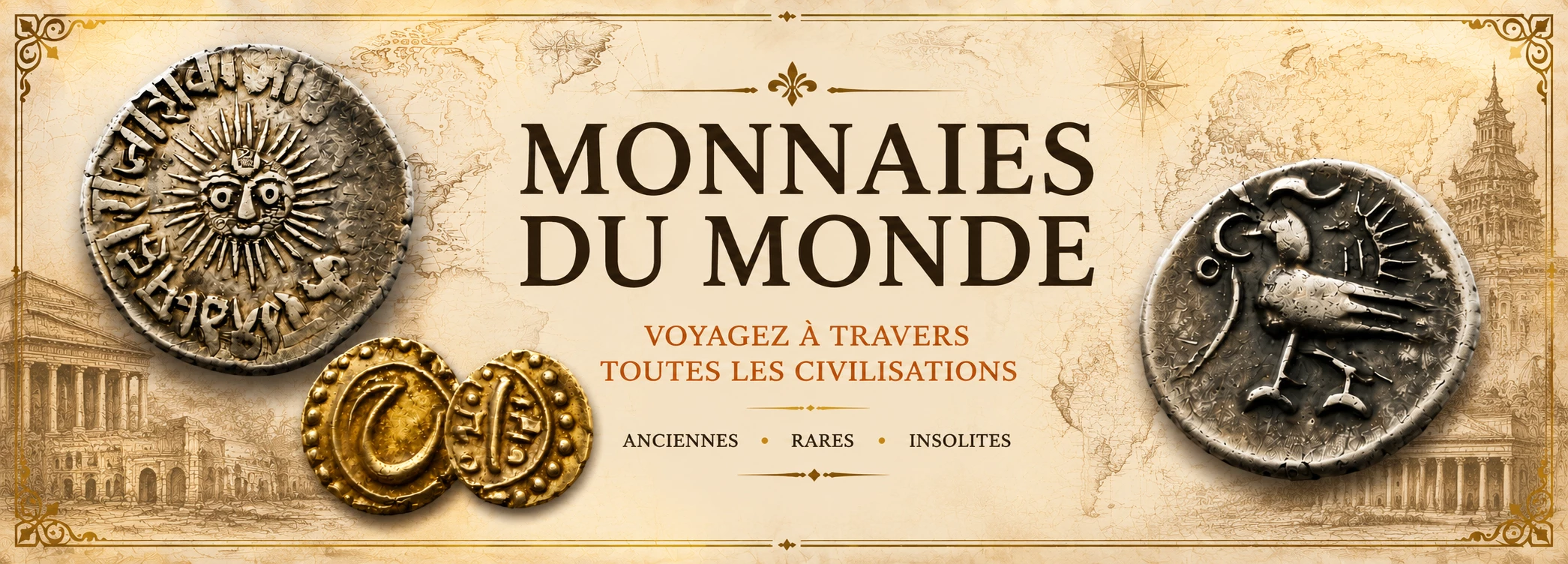
The Kanei Tsuho is a Japanese coin struck in brass, with a face value of 1 mon. This example belongs to the so-called Kanbun series, characterised by the presence of the character Bun (?) on the reverse, which allows it to be identified within the long production run of Kanei Tsuho coins. It was struck between approximately 1668 and 1683, as part of the issues of the Edo period.
Like all Kanei Tsuho coins, it adopts a circular shape with a central square hole, a legacy of Chinese numismatics.
The period 1668?1683 corresponds to the reign of shoguns Tokugawa Ietsuna (1651?1680) and then Tokugawa Tsunayoshi (1680?1709), under the Edo bakufu regime. Japan was experiencing a period of relative domestic political stability, reinforced by the isolationist policy (sakoku) in place since the mid-17th century. Trade with the outside world remained strictly limited to the port of Nagasaki, the only authorised point of contact with the Dutch and the Chinese. This period also saw a significant expansion of the internal monetary economy, which explains the proliferation of Kanei Tsuho minting workshops across the country. Edo (present-day Tokyo) was part of this movement, actively contributing to the supply of everyday currency to a rapidly growing urban population, particularly that of the shogunal capital.