

 Français
 Espagnol
 Allemand
 Italien







Secure payment
3D secure

Delivery in 72 hours
Sending with tracking

Description
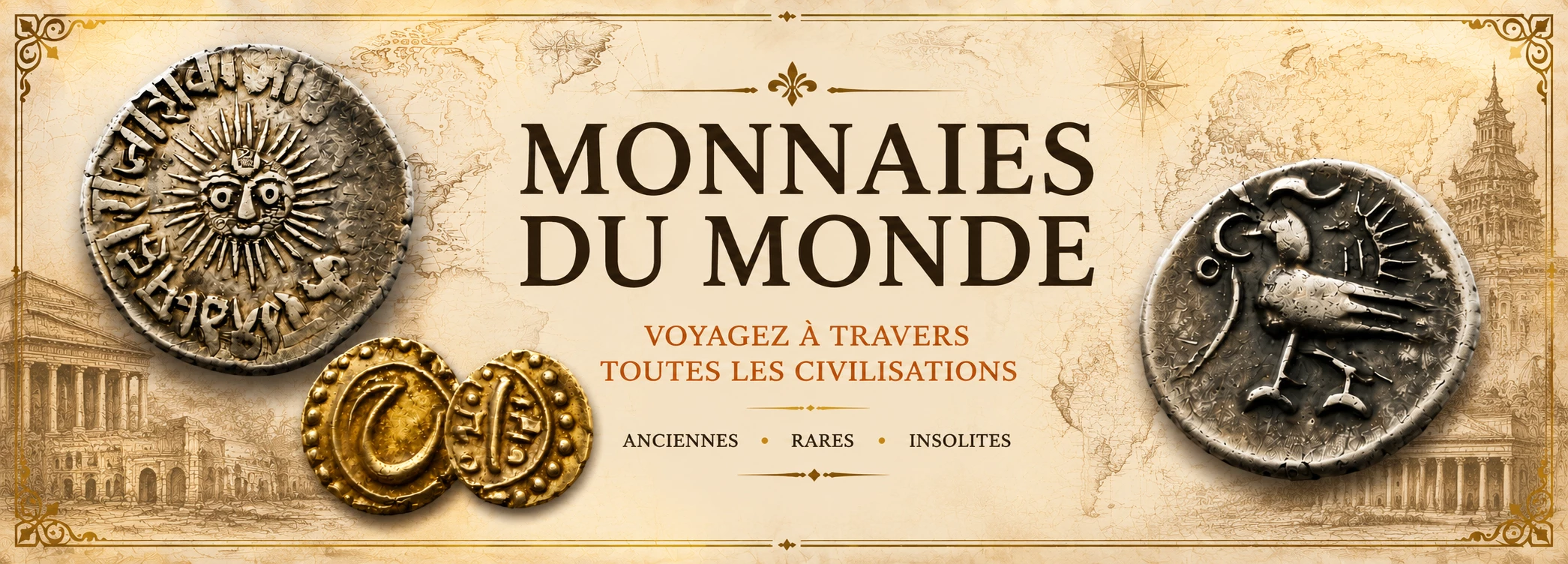
This phân is a Vietnamese coin struck during the reign of Gia Long, founder of the Nguy?n dynasty, and issued between 1802 and 1820.
Like the vast majority of Vietnamese coins of the Sinicized tradition, this phân adopts a circular shape pierced by a central square hole, a direct legacy of Chinese numismatics. This feature notably allowed coins to be threaded onto strings to form monetary strings, facilitating their transport and counting.
From a historical perspective, the period 1802-1820 corresponds to the consolidation of power by Nguy?n Ánh, crowned emperor under the name Gia Long in 1802 after having unified Vietnam from North to South, putting an end to decades of civil wars and the domination of the Tây S?n. He established his capital at Hu? and undertook to reorganize the imperial administration following the Confucian model of the Qing dynasty. Relations with China were formalized through diplomatic recognition, while French influence, fostered notably by the ties forged with Bishop Pigneau de Béhaine, remained limited. The kingdom enjoyed relative internal stability, allowing the development of a more structured monetary economy, as evidenced by the regular issuance of coinage under this founding reign.