

 Français
 Espagnol
 Allemand
 Italien






Secure payment
3D secure

Delivery in 72 hours
Sending with tracking

Description
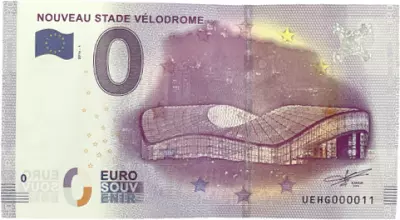
Tourist banknote, 2024, Dome of The Rock
Various numbers available
Presence of watermarks and security features
The Dome of the Rock or the Dome of the Rock, sometimes called the Mosque of Omar, is a sanctuary built at the end of the 7th century on the orders of the Caliph Abd al-Malik ibn Marwan on the Temple Mount. It forms part of the Haram al-Sharif the site that also includes the al-Aqsa Mosque in East Jerusalem.
Completed in the year 691 or in the second part of the year 692 (year 72 of the Hegira), its dome was rebuilt in 1022 and renovated in 1089, 1318, 1448, 1830, 1874, 1962 and then completely in 1994. During this last restoration, copper plates were covered with a thin layer of nickel and gold.
The building derives from models of Byzantine architecture, with a Sassanid Persian influence. Although we know the names of the people who supervised its construction (Raja ibn Haywa, Yazid ibn Sallam and Sahaba), we do not know the name of its architect. The tiles that cover it were installed by Suleiman I in 1545-1552; some of them feature suras that reject the Christian trinity