


 Français
 Espagnol
 Allemand
 Italien







Secure payment
3D secure

Delivery in 72 hours
Sending with tracking

Description
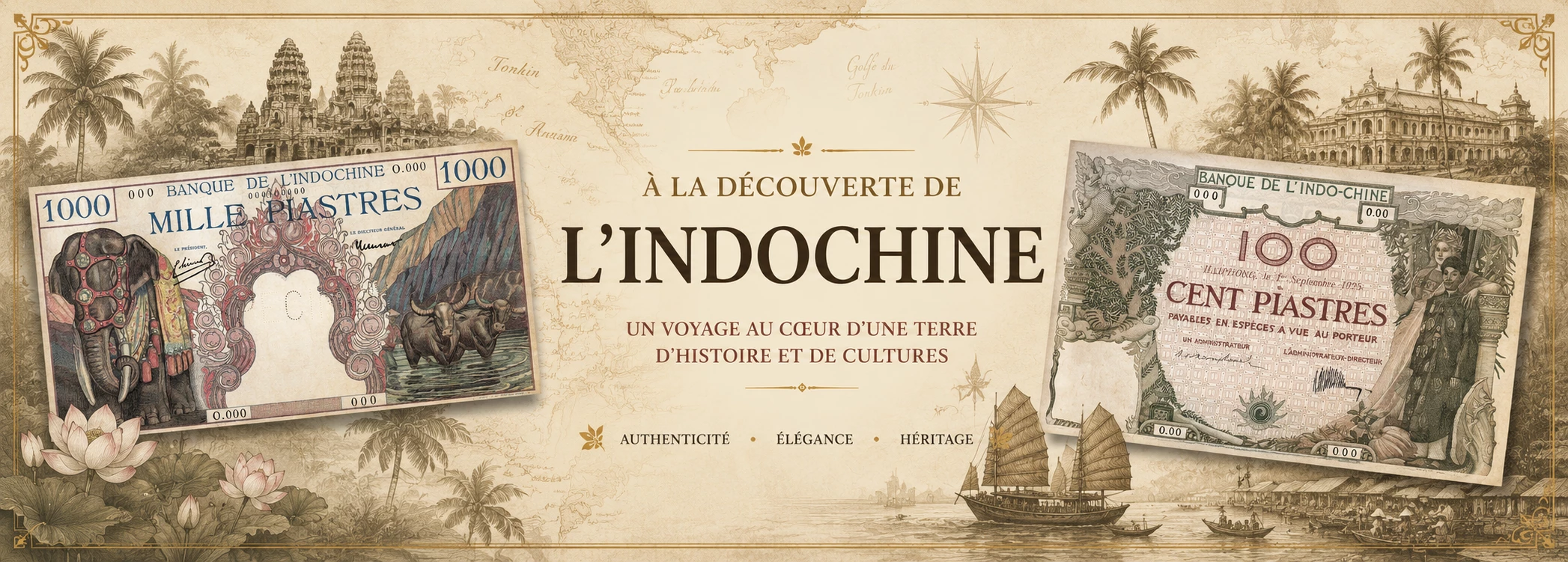
This piastre banknote, issued in 1954, comes from the G.24 series of French Indochina. It measures 128 mm in length and 80 mm in width.
The front of the banknote features a representation of a forest. Specific details of the forest, such as tree types or landscape composition, are not explicitly mentioned, but the image suggests a dense and wooded natural environment.
On the back, the banknote depicts a Chintze statue. Chintze are mythical creatures, often represented as lions, frequently found in the art and architecture of Southeast Asia, particularly in Burma (Myanmar). These statues are considered guardians and are placed at the entrance of temples and pagodas to protect them. The presence of this statue on the banknote underscores the cultural and artistic influence of the region on the design of the currency.
The entire banknote, with its illustrations of the forest and the Chintze statue, offers a glimpse into the important natural and cultural elements of French Indochina at the time. The banknote is a testament to the artistic traditions and protective symbols revered in the region.