Français
 Espagnol
 Allemand
 Italien


 Français
 Espagnol
 Allemand
 Italien







Secure payment
3D secure

Delivery in 72 hours
Sending with tracking

Description
Remarks:
légers plis et taches, tampon au revers
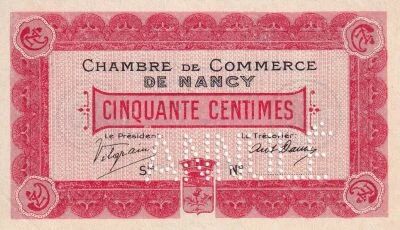
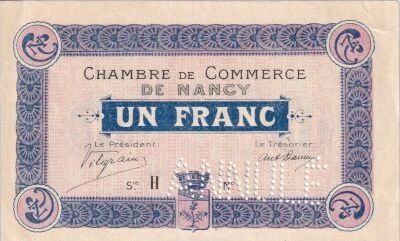
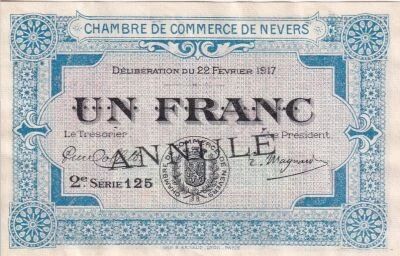
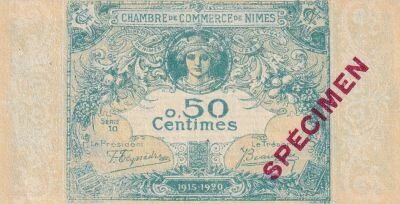
This banknote with a face value of 1 franc was issued on 8 August 1916 by the Regions of Saint-Quentin and Guise, with Urvillers, a commune in the Aisne department, as the place of issue. It is part of the particular context of the First World War, a period during which many French regions that were occupied or close to the front had to compensate for the shortage of fiduciary currency by issuing their own local means of payment.
These emergency monetary issues, in the form of banknotes, were common between 1914 and 1918 in the northern and eastern regions of France. Chambers of commerce, municipalities and various regional entities took charge of producing these payment instruments in order to ensure the continuity of local economic exchanges in the face of disruption to the usual monetary circuits.
The banknote is denominated in francs, the official monetary unit of France at the time. The joint issue in the name of the regions of Saint-Quentin and Guise reflects an intercommunal or regional organisation aimed at giving these notes a sufficient territorial basis and legitimacy to circulate in everyday transactions.
From a numismatic point of view, this type of emergency banknote holds considerable historical and documentary interest. The precise mention of the issue date, 08-08-1916, as well as the geographical location of Urvillers, make it possible to place this document accurately in time and space, making it a direct testimony to the economic and monetary conditions of northern France during the Great War. These notes are today sought after by collectors specialising in French emergency currency from the 1914?1918 period.