Français
 Espagnol
 Allemand
 Italien


 Français
 Espagnol
 Allemand
 Italien






Secure payment
3D secure

Delivery in 72 hours
Sending with tracking

Description
Remarks:
Plis, salissures
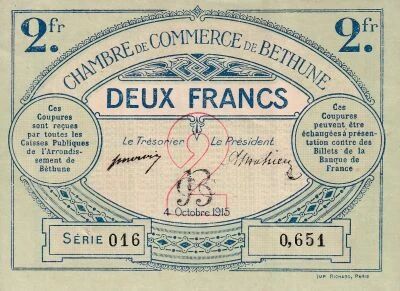
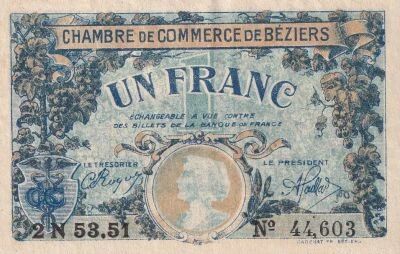
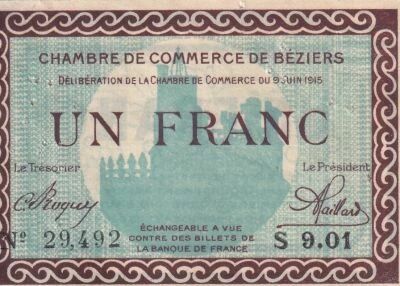
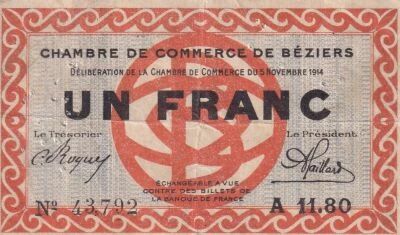
This French banknote was issued by the Belfort Chamber of Commerce on August 18, 1915. It belongs to the G.107 series and its nominal value is 50 centimes.
The obverse of the note features a complex guilloche background, printed in shades of blue and green. In the center, the mention "Chambre de Commerce de Belfort" (Belfort Chamber of Commerce) is found in capital letters, indicating the issuing institution. The face value "50 Centimes" is written in large letters, so as to be easily identifiable. Decorative motifs and ornaments complete the ensemble, giving the note a neat and secure aesthetic. The date of issue, August 18, 1915, is also mentioned on the obverse. The signature of the officials of the Chamber of Commerce is affixed to authenticate the note.
The reverse of the note features the guilloche motifs of the obverse, but in different colors, mainly shades of brown and ochre. The face value "50 Centimes" is repeated, framed by decorative elements. Legal notices and information relating to the issuance of the note are also present. The entire graphic design is designed to make counterfeiting difficult and to ensure public confidence in this emergency currency. The typography used is neat and legible, contributing to the overall appearance of the note.
This type of emergency currency was common during the First World War, when precious metal resources were limited and the need for cash was pressing. Chambers of Commerce, as well as other local institutions, were authorized to issue these notes to facilitate economic exchange.