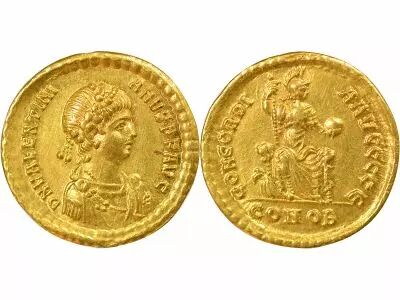
Roman Coins from the End of the Empire (363 to 476). This category includes coins minted during the period of decline and fall of the Western Roman Empire, from 363 AD (beginning of Jovian's reign) to 476 AD (deposition of Romulus Augustulus).
It includes coins issued under the reigns of the following emperors: Jovian, Valentinian I, Valens, Gratian, Valentinian II, Theodosius I, Arcadius, Honorius, Theodosius II (for Western issues), Constantius III, Valentinian III, Petronius Maximus, Avitus, Majorian, Libius Severus, Anthemius, Olybrius, Glycerius, Julius Nepos, and Romulus Augustulus. Active mints during this period, whose issues are included in this category, include Rome, Trier, Milan, Aquileia, Arles, Lyon, Ravenna, and Sirmium, among others.
Common coin types include siliquae, nummi, maiorina, solidi, and gold multiples. Iconographies often reflect imperial propaganda, military power, and the increasingly prominent Christian symbols.
This collection represents a crucial period in Roman history, marked by barbarian invasions, economic crises, and internal divisions, reflected in the quality and types of coins produced. Coins from this period are valuable for understanding the political, economic, and social dynamics of the late Roman Empire.



 Français