

 Français
 Espagnol
 Allemand
 Italien






Secure payment
3D secure

Delivery in 72 hours
Sending with tracking

Description
Remarks:
1 pli
This 5 francs banknote was issued in 1945 for Guadeloupe, a French territory in the Caribbean. It belongs to the C.321 series, a reference that allows precise identification of its issue within the French colonial monetary production of the time.
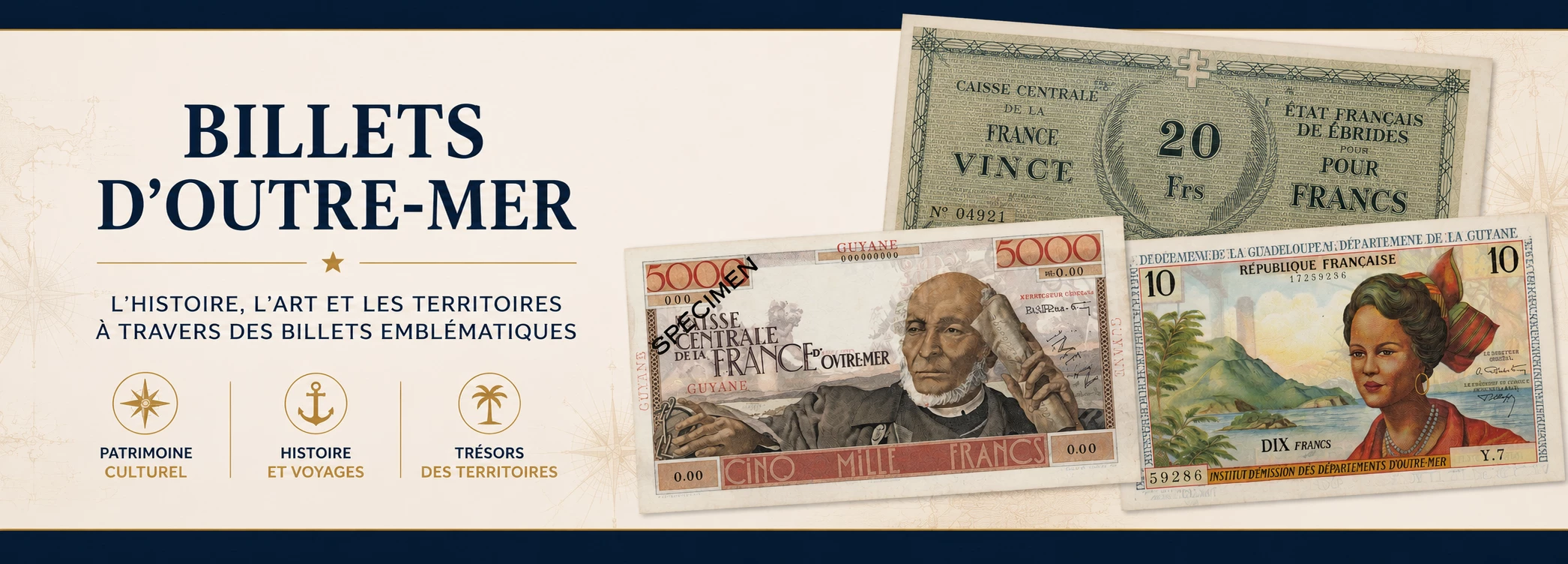
This type of banknote falls within the context of the end of the Second World War, a period during which monetary circulation in French overseas territories was subject to a specific organisation, distinct from that of mainland France. The Caisse Centrale de la France d'Outre-Mer, established in 1944, was responsible for issuing banknotes destined for French colonies and departments, replacing the former issuing bodies. This 5 francs banknote for Guadeloupe is directly part of this major institutional transition.
Banknotes issued for Guadeloupe during this period generally feature evocative illustrations of the Caribbean territories, combining representations of local figures, tropical landscapes or agricultural symbols typical of the island, such as sugarcane. The typography and engraving reflect the graphic style characteristic of French fiduciary productions of the mid-20th century.
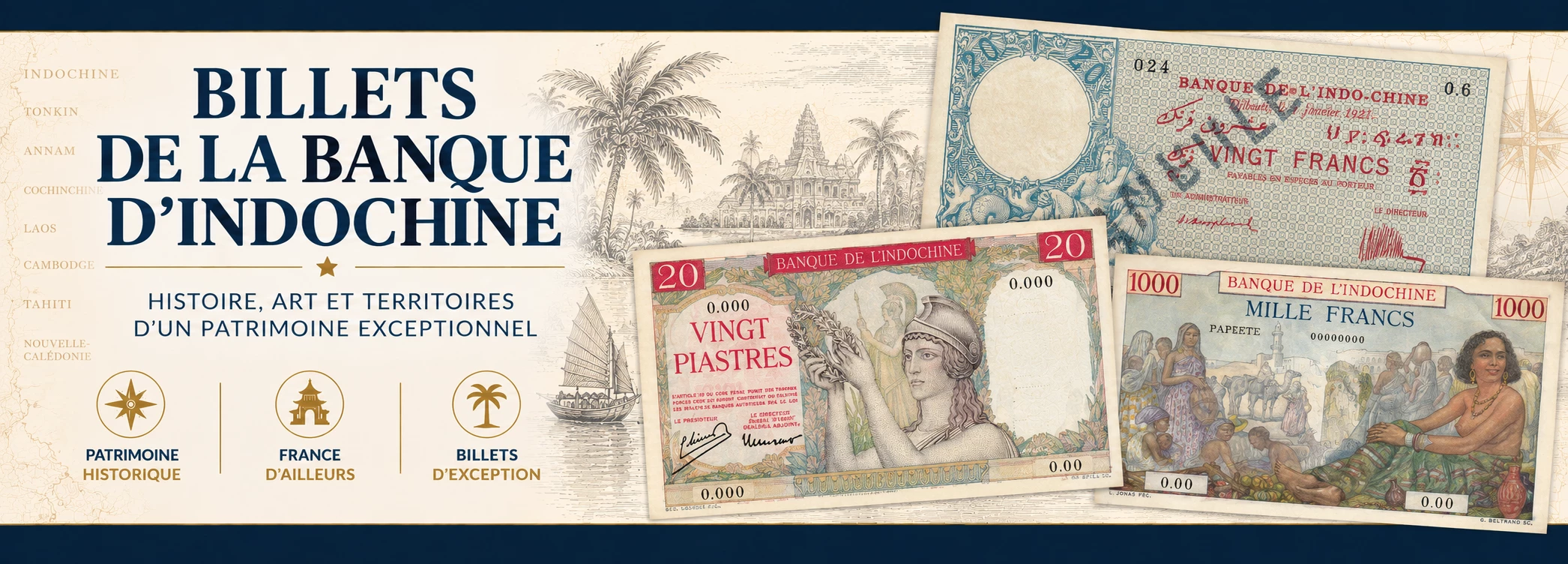
Banknotes from this series and period now stand as historical testimonies of French colonial monetary policy, and are sought after by collectors specialising in the numismatics of overseas territories.
The face value of 5 francs represented a common denomination in the post-war Guadeloupean economy, used for everyday transactions within the local population before the monetary reforms that were to follow in subsequent years.