


 Français
 Espagnol
 Allemand
 Italien






Secure payment
3D secure

Delivery in 72 hours
Sending with tracking

Description
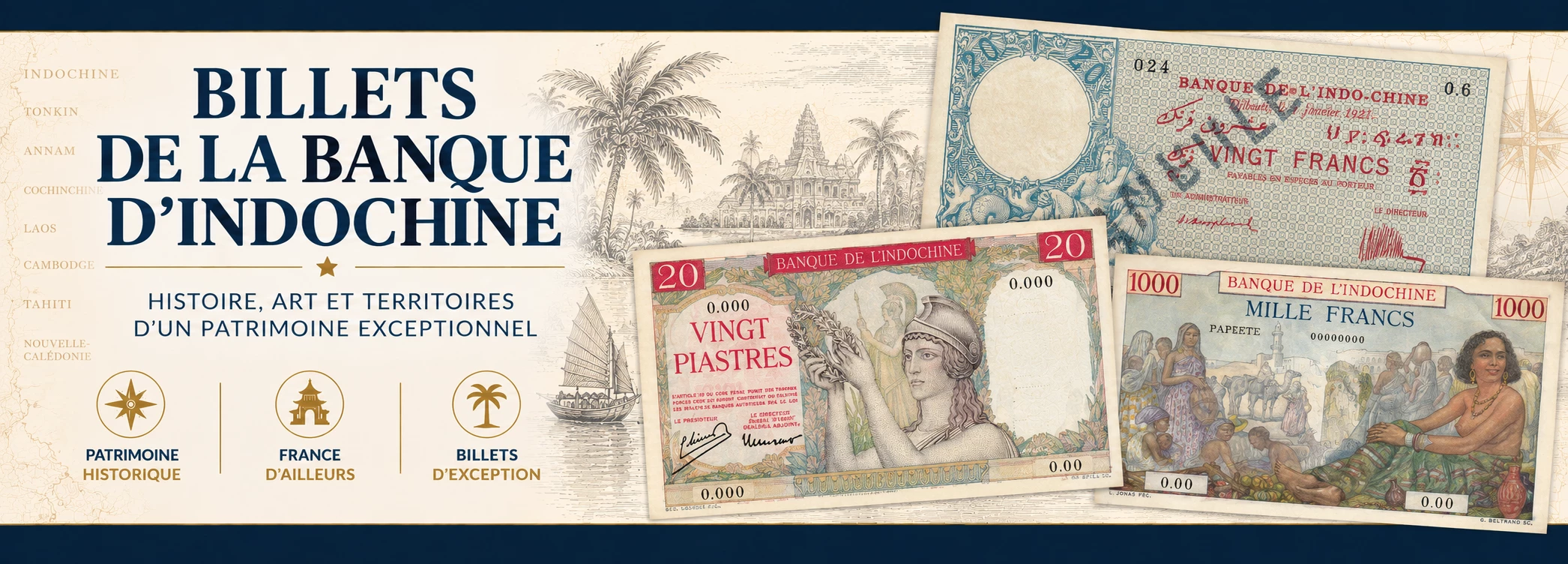
This 1000 piastres banknote was issued in 1951 by the Banque de l'Indochine française (Bank of French Indochina), the institution responsible for monetary issuance in the Indochinese territories under French administration. This is a Specimen example, meaning a banknote produced for reference or official presentation purposes, and not intended for general circulation. Such specimens hold particular importance in the field of numismatics due to their rarity and documentary status.
From an iconographic standpoint, this banknote features a visual composition characteristic of French Indochina issues of this period. The obverse depicts an elephant and a buffalo, two emblematic animals of Indochinese fauna, symbolising strength and rootedness in the represented territories. The reverse illustrates the Bayon temple, a Khmer monument located at the heart of the Angkor Thom complex in Cambodia, whose famous towers adorned with sculpted faces constitute one of the most recognisable architectural symbols of Southeast Asia. This iconographic choice reflects the cultural and territorial representation policy typical of French colonial banknotes of the era.
The Indochinese piastre was the monetary unit in use across the territories of French Indochina, encompassing Vietnam, Cambodia and Laos. The 1000 piastres denomination represented a high face value within the local monetary system. The year 1951 falls within a period of major political transition for the region, lending this banknote a significant historical dimension. The specimen quality of this example makes it a reference piece particularly sought after by collectors specialising in French colonial and Asian numismatics.


