Français
 Espagnol
 Allemand
 Italien


 Français
 Espagnol
 Allemand
 Italien






Secure payment
3D secure

Delivery in 72 hours
Sending with tracking

Description
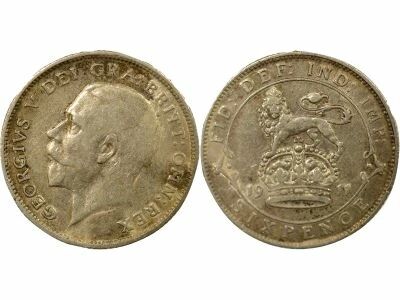
This silver double dirham was struck in Baghdad in 723 AH, corresponding to the years 1323?1324 of the Christian era, during the reign of the Ilkhanid ruler Abu Sa'id Bahadur.
Abu Sa'id Bahadur came to power in 1316 at the age of twelve, succeeding Öljaitü. His reign marked a period of relative stability for the Ilkhanate, following several decades of conflicts and political reorganisations. During the early years of his rule, the young sovereign exercised his authority under the influence of the powerful emir Choban, one of the leading figures of the state.
Baghdad, the former capital of the Abbasid Caliphate, remained a major administrative, intellectual and commercial centre of the Ilkhanate, despite the decline that followed its capture by the Mongols in 1258. The city retained its strategic importance owing to its position along the major trade routes linking Mesopotamia, Iran and the Gulf.
At this time, relations with the Mamluk Sultanate were entering a phase of relative appeasement. The very year of this striking corresponds to the conclusion of a peace treaty between the Ilkhanate and the Mamluks, bringing an end to several decades of recurring wars between the two powers. This coin thus bears witness to the administrative and monetary organisation of an empire still firmly established, a few years before the internal rivalries that would lead to the disintegration of the Ilkhanate following the death of Abu Sa'id in 1335.