

 Français
 Espagnol
 Allemand
 Italien




Secure payment
3D secure

Delivery in 72 hours
Sending with tracking

Description
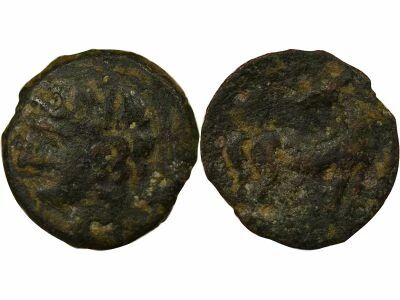
Obverse: GALLIENVS P. F. AVG
Reverse: GERMANICVS MAX V
The reverse depicts a trophy of Germanic arms, composed of armour and military equipment arranged on a post, flanked on either side by a chained barbarian captive. This triumphal iconography forms part of Roman imperial propaganda, illustrating Rome's military superiority over its adversaries.
Gallienus, son and co-emperor of Valerian, reigned during a particularly troubled period of Roman history known as the Crisis of the Third Century. From 253 onwards, the Empire came under intense pressure on its frontiers, particularly from Germanic peoples ? the Alamanni, Franks and Goths ? who carried out repeated incursions into Roman territory. Between 257 and 258, Gallienus conducted several campaigns on the Rhine against these adversaries, achieving successes that earned him the title of Germanicus Maximus. The issue of this antoninianus fits within this context: the depiction of the trophy surrounded by captives is an assertion of imperial power and a celebration of military victories intended to reinforce the ruler's prestige among the army and the population. Two years later, in 260, the capture of Valerian by the Sasanian Persians would open a new phase of the Empire's crisis.