

 Français




Secure payment
3D secure

Delivery in 72 hours
Sending with tracking

Description
The half-franc featuring the Semeuse (Sower) effigy is a French coin issued in 1987 by the Monnaie de Paris, identifiable by the mint mark A. With a mintage of 49,994,216 specimens, this coin was produced in large quantities to meet the demands of everyday circulation.
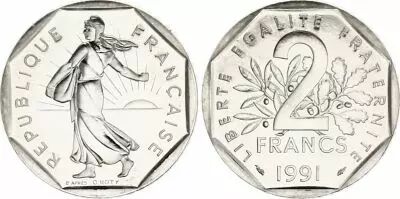
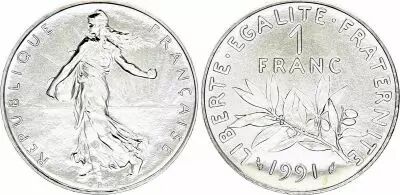
The Semeuse, an allegorical figure representing a woman sowing seeds in a field, was created by engraver Louis Oscar Roty, who designed it in the late 19th century. This motif, which has become iconic in French numismatics, adorns the obverse of the coin. The silhouette of the sower striding against the wind, her hair and dress slightly lifted, is accompanied by republican inscriptions and the date of issue.
The reverse of the coin features the traditional elements characteristic of French coins in this series, indicating a face value of 0.5 franc.
Made of copper-nickel, this coin displays the dimensional and weight characteristics typical of its denomination: it has a diameter of 19.5 millimetres and a weight of 4.5 grams. The copper-nickel alloy gives it a distinctive silver-like appearance, good wear resistance, and durability suited to intensive daily use.
This monetary type is part of the long tradition of the Semeuse on French coins of the 20th century, a series that continued until the introduction of the euro in the early 2000s. The 1987 vintage corresponds to a period of the French Fifth Republic during which this effigy continued to embody the founding values of the French Republic on circulating currency.