

 Français
 Espagnol
 Allemand
 Italien





Secure payment
3D secure

Delivery in 72 hours
Sending with tracking

Description
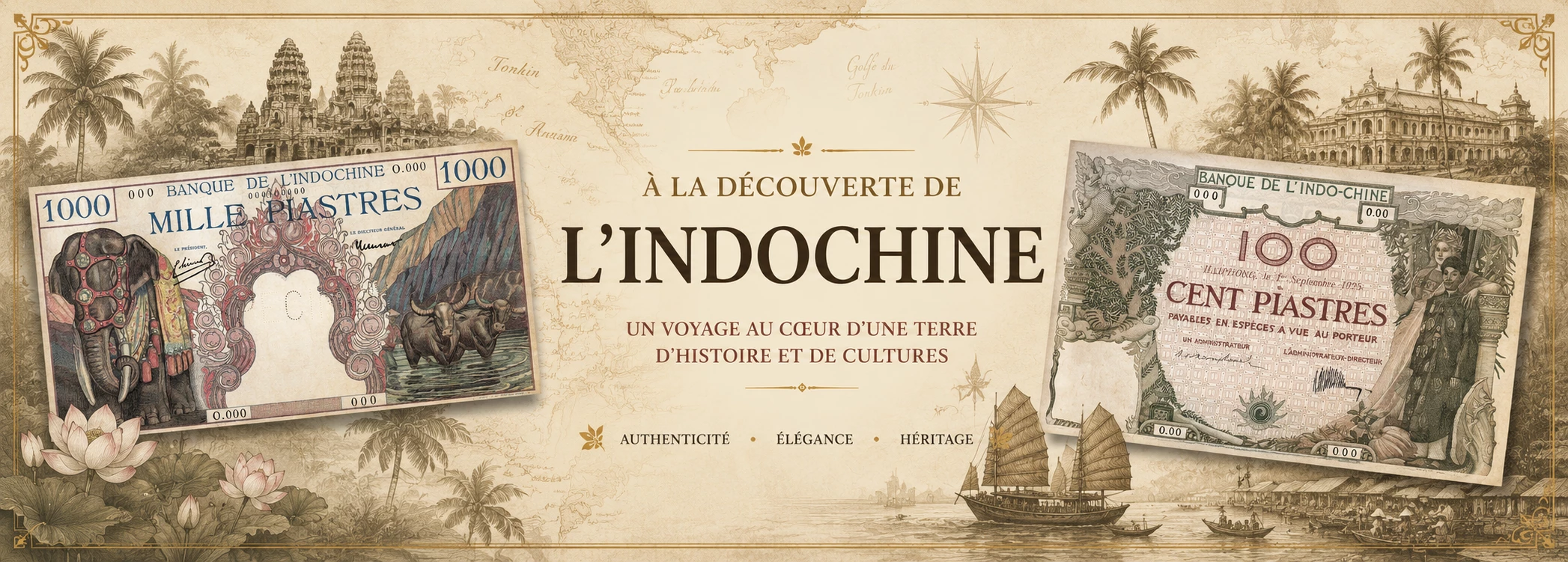
The 5 Piastres banknote from French Indochina, issued in 1953, series A.8, is a testament to the French colonial era in Southeast Asia. This banknote features distinct iconographic characteristics on both sides, reflecting both local culture and European influences.
On the obverse, the main motif is a banana tree, accompanied by a palm tree. The representation of the banana tree, a tropical tree, highlights the importance of agriculture and nature in the region. The palm tree complements this landscape, evoking the hot and humid climates of Indochina.
The reverse of the banknote features a naga head, a mythical serpent venerated in the cultures of South and Southeast Asia. The naga is often associated with protection, fertility, and wealth. Its inclusion on the banknote demonstrates the issuer's desire to recognize and respect local beliefs. The representation of the naga head is a distinctive element, integrating a mythological figure deeply rooted in the region's culture.
This 5 Piastres banknote, issued in 1953, is a historical artifact that illustrates the cultural and economic interactions of French Indochina. It combines natural and mythological elements, offering an insight into the values and symbols important to the local population.