Français
 Espagnol
 Allemand
 Italien


 Français
 Espagnol
 Allemand
 Italien







Secure payment
3D secure

Delivery in 72 hours
Sending with tracking

Description
This banknote is an emergency issue from France, with a face value of 50 francs. It was issued by the cities of Roubaix and Tourcoing, located in the Nord department.
The note bears the inscription "SPECIMEN", indicating that it is a demonstration or archive copy. It belongs to the 13th series, with the reference number R6027. The issue date printed on the note is December 15, 1917.
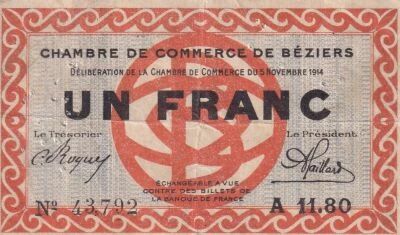
This type of note was issued during the period of the First World War, specifically between 1914 and 1918, as part of the Common Needs and Cities issues. These issues were intended to compensate for the lack of metallic currency in circulation due to the conflict.
The original issue date of this specific series is December 16, 1916, with a prefectural approval dated December 28, 1916. These notes were issued locally to facilitate economic transactions in a context of national liquidity shortage.
The 50 franc Roubaix-Tourcoing note is a historical testimony to the economic and monetary difficulties encountered by local populations during the First World War. It represents a form of alternative currency put in place to maintain economic activity at the local level.