Français
 Espagnol
 Allemand
 Italien


 Français
 Espagnol
 Allemand
 Italien






Secure payment
3D secure

Delivery in 72 hours
Sending with tracking

Description
Remarks:
Plis, salissures, 1 épinglage
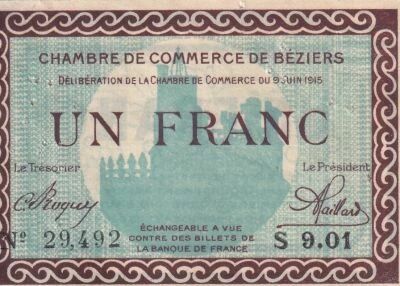
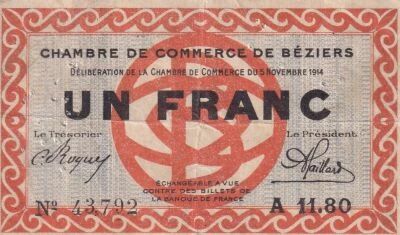
This 50 centime note was issued by the Avignon Chamber of Commerce in 1914. It is a type of emergency currency, issued during a shortage of official currency during the First World War.
The note has a rectangular format typical of banknotes. The front of the note displays the nominal value "50 Centimes" in numerals and letters. It also includes the name of the issuing institution, "Chambre de Commerce d'Avignon", as well as the year of issue, "1914". The note's identification number, "Numéro 123", is also printed. Decorative motifs and security features, such as guilloches or watermarks, may be present to prevent counterfeiting. The typography and graphic style reflect the aesthetics of the time.
The back of the note may include additional information, illustrations or legal notices. The dominant color of the note is to be determined, as well as the secondary colors used for prints and patterns. The state of preservation of the note is an important factor in assessing its numismatic value. Notes in perfect condition, without creases, tears or discoloration, are generally more sought after by collectors.
This type of note reflects the economic and social context of France during the First World War, where the Chambers of Commerce played a crucial role in managing local finances and facilitating trade in the absence of sufficient official currency.