Français
 Espagnol
 Allemand
 Italien


 Français
 Espagnol
 Allemand
 Italien






Secure payment
3D secure

Delivery in 72 hours
Sending with tracking

Description
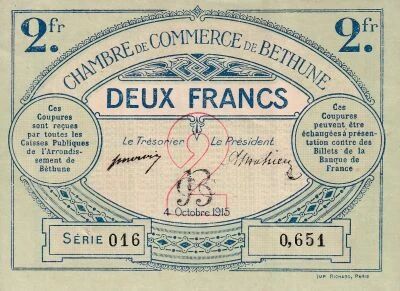
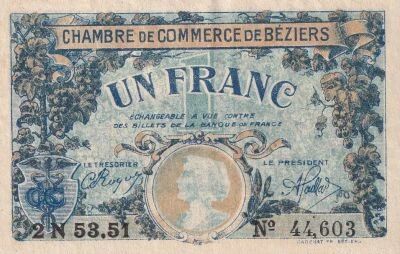
This emergency banknote, issued in France, has a face value of 50 centimes. It dates from January 1, 1916. It was issued by a public limited company, Aciéries de France (Steelworks of France). This type of banknote falls within the period of Common and City Needs, covering the years 1914 to 1918.
The banknote is referenced JP.62-0650. It belongs to Series 1. The front of the banknote bears the indication of the face value, "50 CENTIMES", as well as the name of the issuer, "Aciéries de France". The date of issue, "1er JANVIER 1916", is also mentioned. The design includes graphic and typographic elements specific to the era and the issuer.
The back of the banknote potentially includes security elements or additional information about the issuer or the conditions of issue. The colors used are typical of emergency banknotes of this period, often monochrome or bichrome due to printing constraints and material shortages related to the First World War. The typography and ornaments reflect the artistic style and economic concerns of the time.
As an emergency banknote, it testifies to the particular economic and social circumstances of France during the First World War, where shortages of fractional currency led to the issuance of low-value banknotes by companies, municipalities and other local institutions to facilitate daily transactions. The mention "Aciéries de France" indicates that this steel company contributed to the war effort by ensuring local economic exchanges.