Français
 Espagnol
 Allemand
 Italien


 Français
 Espagnol
 Allemand
 Italien






Secure payment
3D secure

Delivery in 72 hours
Sending with tracking

Description
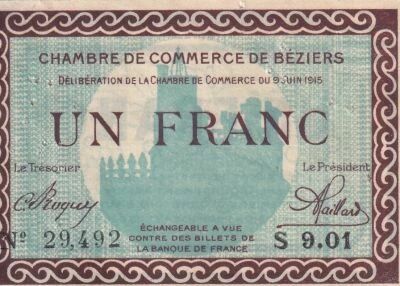
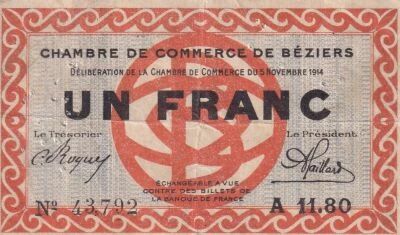
This 50 centimes note was issued by the Chamber of Commerce of Boulogne-sur-Mer, in France. The date of issue is August 14, 1914. This is an emergency banknote, issued in a context where the usual means of payment were disrupted.
The obverse of the note features the following inscriptions: "CHAMBRE DE COMMERCE DE BOULOGNE-SUR-MER" at the top, indicating the issuing institution. Below, we can read "Délibération de la Chambre du 14 Août 1914", specifying the date of the decision authorizing the issuance of this note. The face value, "CINQUANTE CENTIMES", is clearly indicated in the center. The signatures of the Treasurer and the President of the Chamber of Commerce are affixed at the bottom of the note. A serial number, "580834 C 1. 580834", is also present, allowing the unique identification of each note.
This type of emergency banknote was common during periods of economic crisis or war, when reserves of metallic currency were insufficient or hoarded. Chambers of Commerce, municipalities, and other local institutions were then authorized to issue their own currency to facilitate trade and ensure the continuity of economic activity. Today, these notes are valuable testimonies to the economic and social history of France during the First World War.
The series to which this note belongs is series C1. The obverse is the only side described here, providing essential information about the issuer, the value, and the context of issue.