Français
 Espagnol
 Allemand
 Italien


 Français
 Espagnol
 Allemand
 Italien








Secure payment
3D secure

Delivery in 72 hours
Sending with tracking

Description
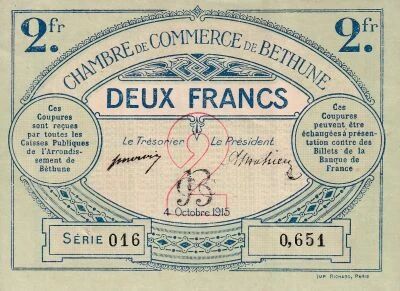
This French banknote has a face value of 20 francs. It belongs to the 11th series of banknotes issued during the period of Common Needs and Cities, between 1914 and 1918.
The banknote is associated with the cities of Roubaix and Tourcoing, located in the Nord department of France. Its identification number is 4530.
This type of banknote was issued in response to the exceptional circumstances of the First World War, where local needs led to the creation of alternative currencies to facilitate economic exchanges within communities.
It is important to note that this banknote shows traces of cancellation, carried out by perforation. These perforations indicate that the banknote has been withdrawn from circulation and invalidated by the issuing authority.
The presence of such cancellation marks may influence the numismatic value of the banknote, but it also testifies to its authenticity and history as a means of payment used during a specific period of French history.
This banknote is a tangible testimony to the economic and monetary challenges faced by local populations during the war, and how they sought to address them by implementing alternative solutions to maintain economic activity.