

 Français



Secure payment
3D secure

Delivery in 72 hours
Sending with tracking

Description
Remarks:
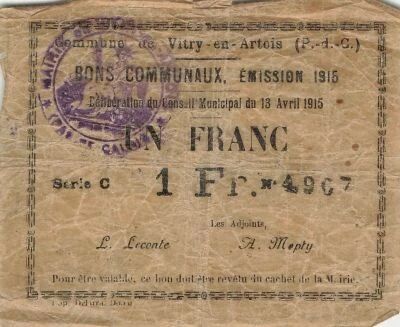
This 1 Franc banknote was issued by the Chamber of Commerce of Châteauroux in 1915. It is a necessity bond, issued in a context where metal currency was scarce due to the First World War. The banknote is dated April 6, 1915 and is identified by series A and number 5121.
On the front, we can read the inscription "CHAMBRE DE COMMERCE DE CHATEAUROUX" as well as the mention "BON DE UN FRANC", indicating its face value. The signatures of the Treasurer and the President of the Chamber of Commerce are present, attesting to the issue of the banknote. A mention specifies that the issue was approved by the Higher Administration. The name of the printer, "IMP BADEL CHATEAUROUX", also appears.
The reverse of the banknote is more sober, bearing only the mention of the printer: "Imprimerie Badel, Châteauroux, France". The general graphics of the banknote are simple, reflecting the economic constraints and the imperatives of rapid production of the time. This type of banknote testifies to the monetary adaptations put in place to compensate for the lack of cash during the war period.