Français
 Espagnol
 Allemand
 Italien


 Français
 Espagnol
 Allemand
 Italien







Secure payment
3D secure

Delivery in 72 hours
Sending with tracking

Description
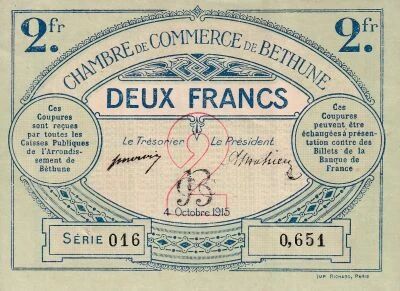
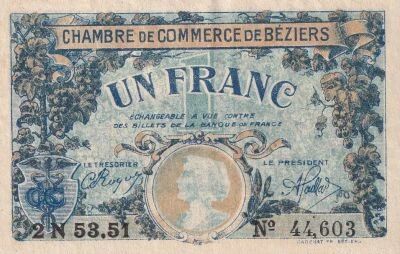
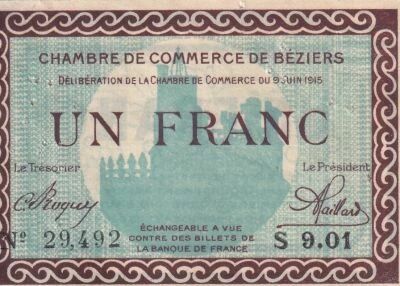
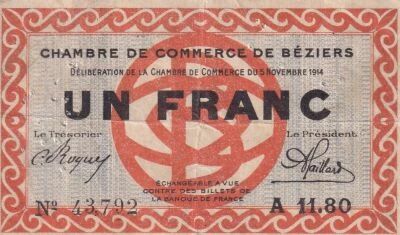
This 1 Franc banknote was issued by the Rouen Chamber of Commerce in 1916. It is a type of banknote issued during a shortage of fractional currency during the First World War.
On the obverse, the banknote displays the face value "Un Franc" in the upper left. The name of the city "Ville de Rouen" is written above the issuing entity, "Chambre de Commerce de Rouen". The year of issue, "1916", is also present. There are also the signatures of the Mayor and the President of the Chamber of Commerce. The printer's mention, "IMP. RICHARD PARIS", appears at the bottom.
The reverse of the banknote contains a list of conditions relating to its use and validity. The text is written in Latin. The printer of this banknote is Imprimerie Richard, located in Paris, France.
The dimensions of the banknote are 115 mm in length and 78 mm in width. It is printed on paper, as was the custom for banknotes of that era.
This type of banknote testifies to the economic and social context of the First World War, where Chambers of Commerce were authorized to issue emergency currency to facilitate local exchanges.