

 Français







Secure payment
3D secure

Delivery in 72 hours
Sending with tracking

Description
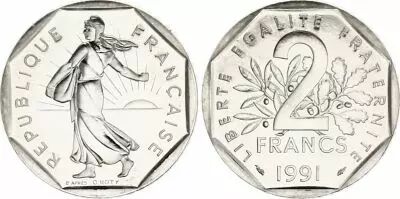
This coin is a one French centime, minted in 1896 at the Paris Mint, identified by the letter "A". It is made of bronze.
The main motif of the coin is Ceres, Roman goddess of agriculture, harvests, and fertility. She is depicted in profile, wearing a crown of ears of wheat and flowers, symbolizing abundance and agricultural prosperity. Her face is finely detailed, reflecting the classical features of the goddess.
On the reverse of the coin, there is a fasces, a symbol of the authority and of the French Republic. The fasces is composed of rods tied around an axe, representing the unity and strength of the State. The nominal value of "1 centime" is inscribed in letters under the fasces. The year of issue, 1896, is indicated at the bottom of the coin.
The coin has a diameter of 15 millimeters. Its weight is 1 gram. The edge of the coin is smooth.
This coin is part of a series of coins issued during the French Third Republic, which lasted from 1870 to 1940. These coins were used for daily transactions and testify to the economic and political history of France at the end of the 19th century.