

 Français





Secure payment
3D secure

Delivery in 72 hours
Sending with tracking

Description
Remarks:
Observe : + SCS MARTINVS
Reverse : + TVRONVS CIVI
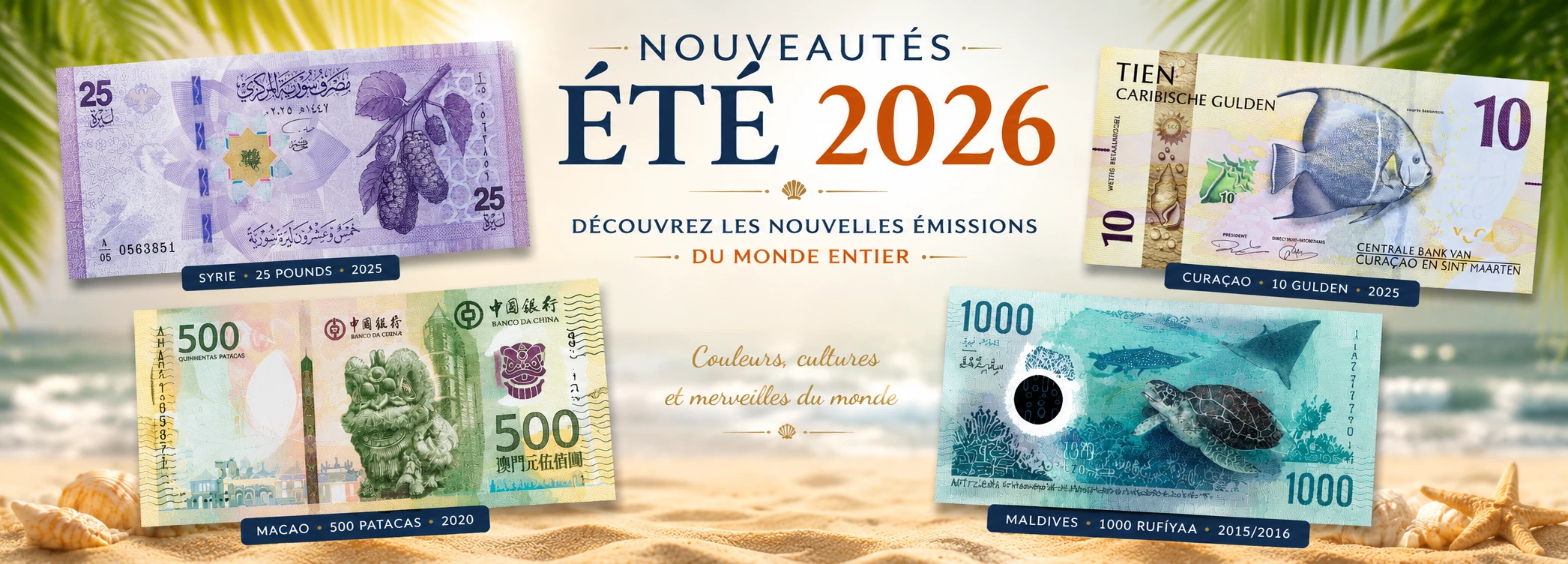
The Curaçao coin series issued in 2025 is part of a major monetary reform aimed at modernizing the system inherited from the Netherlands Antilles. As with Sint Maarten, these coins are not euros, but belong to the Caribbean guilder, a regional currency intended to gradually replace the old Netherlands Antillean guilder. This issue marks an important step in Curaçao's monetary and identity affirmation.
The complete series consists of 7 circulating coins, ranging from 1 cent to 5 guilders. It covers all daily needs, from small transactions to larger amounts. This classic structure allows for continuity in usage, while introducing a new visual identity specific to the territory.
Artistically, the low-value coins ? from 1 to 50 cents ? highlight Curaçao's natural and cultural symbols, particularly inspired by the local fauna, flora, and heritage. These motifs reflect the island's richness, known for its biodiversity, marine landscapes, and multicultural heritage. Each coin helps tell a facet of the territory, while maintaining an overall graphic coherence.
The higher values, such as the 1 guilder and 5 guilder, adopt a more institutional iconography with the portrait of King Willem-Alexander. This choice recalls Curaçao's membership in the Kingdom of the Netherlands and is in line with Dutch numismatic tradition. The contrast between local motifs and royal effigy reflects the balance between cultural autonomy and political framework.
From a technical point of view, the coins are designed for intensive circulation. The small denominations are struck in resistant alloys, while the higher values are often distinguished by a bimetallic structure, offering better security and easier visual identification. The striking quality is modern, with examples available in numismatic quality for collectors.
Finally, this series is of particular interest to numismatists, as it is one of the first contemporary issues clearly identified in the name of Curaçao in this new monetary system. Still not widespread outside the region, it offers interesting collection potential, especially in complete series and in uncirculated condition. It also testifies to a key moment in the monetary evolution of the Dutch Caribbean in the 21st century.