

 Français










Secure payment
3D secure

Delivery in 72 hours
Sending with tracking

Description
Remarks:
Plis, épinglages et salissures
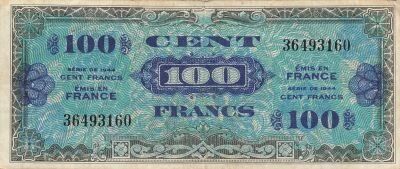
The 100 Nouveaux Francs Bonaparte banknote was issued in 1959 as part of the French monetary reform introduced by General de Gaulle, who replaced the old franc with the new franc at a conversion rate of 1 to 100. This banknote belongs to series R.8 and has a face value of 100 new francs.
The central figure on this banknote is Napoleon I, Emperor of France and King of Italy, one of the most iconic personalities in French history. The choice of Bonaparte to illustrate this denomination reflects the importance given to this historical figure in the representation of French national heritage on the fiduciary instruments of the time.
This banknote belongs to a series issued by the Banque de France, the institution responsible for monetary issuance on French territory. The 100 new francs Bonaparte banknote was one of the first major denominations put into circulation under the new monetary system, giving it a special place in French numismatic history of the 20th century.
Banknotes of this generation incorporated security features typical of the era, including watermarks and intaglio printing, techniques then in use at the Banque de France printing works to combat counterfeiting.
Today, banknotes from this series, particularly those in high grade condition, are sought-after collectibles among French numismatic enthusiasts, bearing witness to a pivotal period in France's economic and monetary history.